Tuberculosis (BCG) Vaccine for Babies in Dubai
The BCG vaccine helps protect babies and young children against serious forms of tuberculosis (TB), including tuberculosis meningitis and widespread TB infection. It is an important part of infant immunization in countries where tuberculosis remains a public health concern. At Dr. Rami Hamed Center (DRHC) in Dubai, our pediatric team can guide parents on BCG vaccination, timing, safety, and follow-up care.
What Is Tuberculosis?
Tuberculosis is an infectious disease caused by bacteria called Mycobacterium tuberculosis. It most commonly affects the lungs, but it can also spread to other parts of the body, including the brain, bones, kidneys, and bloodstream.
TB can spread through the air when a person with active pulmonary tuberculosis coughs, sneezes, speaks, or sings. Babies and young children may be more vulnerable to severe forms of TB because their immune systems are still developing.
What Is the BCG Vaccine?
BCG stands for Bacille Calmette-Guérin. It is a vaccine used to help protect against tuberculosis. The vaccine does not prevent every case of TB, particularly all forms of adult pulmonary tuberculosis, but it provides important protection against severe TB disease in babies and young children.
The BCG vaccine is a live, weakened bacterial vaccine. It is usually given as a small injection into the skin, commonly in the upper arm, according to the recommended infant immunization schedule.
Why Is BCG Vaccination Important for Babies?
Infants who become infected with tuberculosis may develop serious complications more quickly than older children or adults. BCG vaccination is especially valuable because it helps reduce the risk of severe and potentially life-threatening forms of childhood TB.
- Helps protect against TB meningitis
- Reduces the risk of widespread or disseminated tuberculosis
- Provides early protection during infancy
- Supports childhood tuberculosis prevention
- May be particularly important for babies with a higher risk of TB exposure
When Should Babies Receive the BCG Vaccine?
BCG vaccination is commonly given at birth or as early as possible during infancy, depending on the national immunization recommendations, the baby's medical condition, and the availability of the vaccine.
The exact timing in Dubai should be confirmed with a pediatrician because immunization recommendations may be updated by the relevant health authorities. The DRHC pediatric vaccination team can review your baby's vaccination record and advise when BCG vaccination is appropriate.
Parents should not delay the vaccine without discussing the reason with a pediatrician, particularly when the baby may have an increased risk of tuberculosis exposure.
How Is the BCG Vaccine Given?
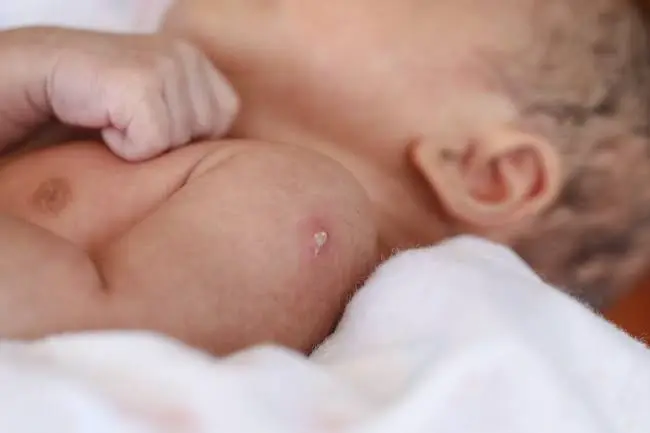
The BCG vaccine is administered as an injection into the skin. A small raised area may appear at the injection site immediately after vaccination. Over the following weeks, the area may develop into a small spot or blister, followed by a shallow sore and eventually a small scar.
The appearance and timing of the local reaction can vary from one baby to another. The vaccination site should be kept clean and allowed to heal naturally.
What Reaction Can Parents Expect After BCG Vaccination?
- A small raised bump at the injection site
- Mild redness or swelling
- A small blister or sore after several weeks
- A crust that heals naturally
- A small permanent scar
This reaction is usually part of the normal immune response. The sore should not be squeezed, scratched, covered with tight dressings, or treated with creams or antiseptics unless advised by a healthcare professional.
BCG Vaccine Side Effects
Most babies tolerate the BCG vaccine well. Common local effects include redness, swelling, a small sore, and scarring. Mild discomfort may also occur at the injection site.
Less common complications may include a larger local reaction, swollen lymph nodes, or an infection at the vaccination site. Serious complications are uncommon but may be more likely in babies with certain immune system disorders.
- Increasing redness, warmth, or swelling around the injection site
- Large or persistent discharge from the vaccination area
- Significant swelling of nearby lymph nodes
- Persistent fever or unusual weakness
- Poor feeding or other concerning symptoms
What Should Parents Avoid After BCG Vaccination?
Parents should allow the vaccination site to heal naturally. Avoid applying powders, creams, antibiotics, alcohol, or other products unless specifically recommended by the pediatrician.
- Do not squeeze or puncture the sore
- Do not remove the crust forcefully
- Do not cover the site with an airtight dressing
- Keep the area clean and dry
- Follow the pediatrician's instructions if the site becomes irritated
Who May Need Special Advice Before BCG Vaccination?
BCG is not suitable for every baby. The pediatrician should be informed if the baby has a known or suspected immune system disorder, is receiving immunosuppressant treatment, or has a significant medical condition.
Special assessment may be needed for babies who:
- Have suspected or confirmed immune deficiency
- Are you receiving chemotherapy or immunosuppressing medicines
- Have a serious illness or are medically unstable
- Were born into a family with a relevant history of immune disorders
- Have already received BCG or another tuberculosis vaccine
Can BCG Be Given With Other Baby Vaccines?
BCG may be administered during the newborn or infant vaccination period alongside other recommended vaccines, depending on the current immunization schedule and clinical circumstances. Your pediatrician will confirm the appropriate timing and whether any vaccines need to be given at a separate visit.
Does the BCG Vaccine Cause a Positive TB Skin Test?
BCG vaccination can affect the interpretation of some tuberculosis skin tests. If your child later requires TB testing, tell the healthcare professional that the child received BCG and provide the vaccination date if available.
Depending on the child's age, medical history, and the reason for testing, the healthcare professional may choose the most suitable tuberculosis test.
What If My Baby Missed the BCG Vaccine at Birth?
If your baby did not receive BCG at birth, arrange a pediatric consultation. The doctor will consider the baby's current age, medical history, previous vaccines, possible TB exposure, and the applicable Dubai immunization recommendations.
Do not give the vaccine later without medical assessment, as eligibility and testing requirements may vary for older infants and children.
BCG Vaccination at DRHC in Dubai
At Dr. Rami Hamed Center (DRHC), our pediatric team can help parents understand BCG vaccination and other routine childhood immunizations. During a consultation, the pediatrician can:
- Review the baby's vaccination card
- Assess the baby's age and medical history
- Discuss the benefits and expected local reaction
- Identify conditions that may require special advice
- Provide guidance if the vaccine was missed at birth
- Explain aftercare and when to seek medical attention



.png?width=281&height=59&name=bookanappointment%20(1).png)