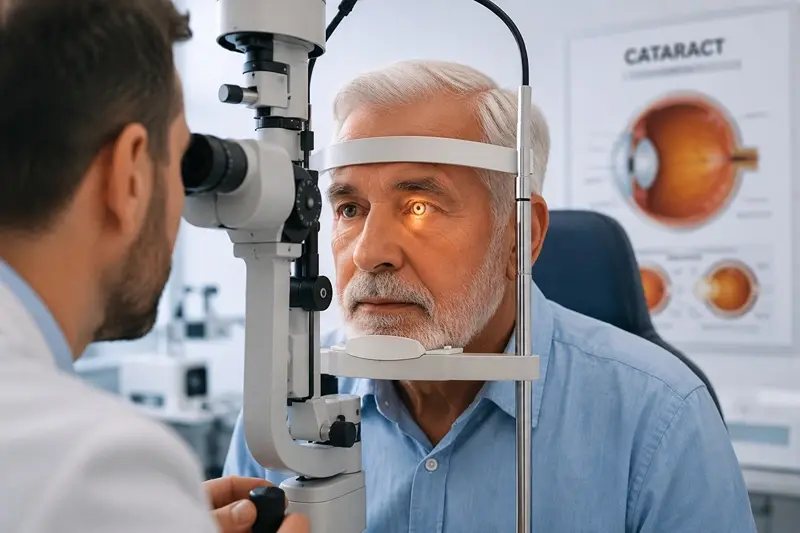
Symptoms of Cataract
Symptoms can vary depending on how severe the cataract is, but they commonly include:
- Vision changes, such as blurry vision or frequent changes in glasses
- Glare when looking at bright lights
- Difficulty seeing in dim light
Read more: Early Signs of Cataracts You Shouldn’t Ignore
Cataract Treatment
Unfortunately, no medication or eye drop can reverse a cataract. The only effective treatment is cataract surgery.
Cataract surgery involves removing the cloudy natural lens and replacing it with a clear artificial intraocular lens (IOL). The procedure is typically performed under local anesthesia on a day-care basis, allowing most patients to return home the same day.
Cataract Surgery Options at DRHC
Phacoemulsification Cataract Surgery
Phacoemulsification is the most commonly performed cataract surgery technique worldwide.
During the procedure, ultrasound energy is used to break the cloudy lens into tiny fragments, which are then removed through a small incision. A foldable intraocular lens (IOL) is implanted to replace the natural lens.
Benefits include:
- Small incision
- No stitches in most cases
- Minimal discomfort
- Fast recovery
- Excellent visual outcomes
Femtosecond Laser-Assisted Cataract Surgery (FLACS)
Femtosecond laser technology can assist with specific stages of cataract surgery, including:
- Corneal incisions
- Lens capsule opening
- Lens fragmentation
This advanced technology may be beneficial in selected patients, particularly those with complex or dense cataracts.
Extracapsular Cataract Extraction Surgery (ECCE)
In cases of very hard, dense cataracts where ultrasound is unlikely to break down the cataract, our surgeon may recommend extracapsular surgery. A small incision is made at the outer edge of the cornea. The surgeon carefully opens the front of the capsule that holds the lens in place. The lens is usually removed in one piece without fragmentation, although suction may be used to remove any smaller pieces.
Intracapsular Cataract Extraction (ICCE)
This technique is a variation of extracapsular cataract extraction, but with a larger incision. It may be used for patients with cataracts caused by eye trauma.
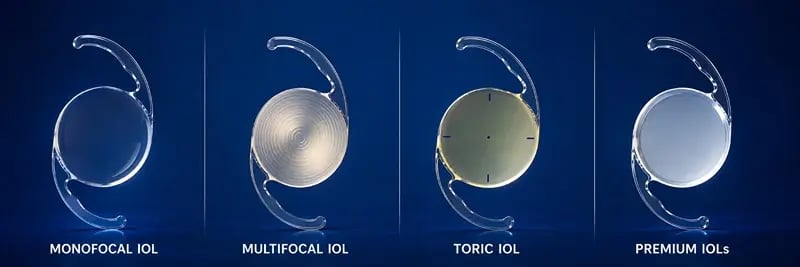
Following cataract surgery, an artificial intraocular lens (IOL) is implanted to restore clear vision.
Our cataract specialists offer a range of lens options tailored to your lifestyle, visual needs, and eye condition, including Monofocal, Multifocal, Toric, and Premium IOLs.
During your consultation, your ophthalmologist will help you choose the most suitable lens for the best possible visual outcome.
Get crystal-clear vision with advanced cataract treatment and surgery options at Dr. Rami Hamed Center. Our expert eye clinic offers advanced techniques to address the causes and symptoms of cataracts, helping you experience improved eyesight and regain visual freedom with our trusted team of professionals.



.png?width=281&height=59&name=bookanappointment%20(1).png)