Plaque Incision and Grafting for Peyronie’s Disease in Dubai
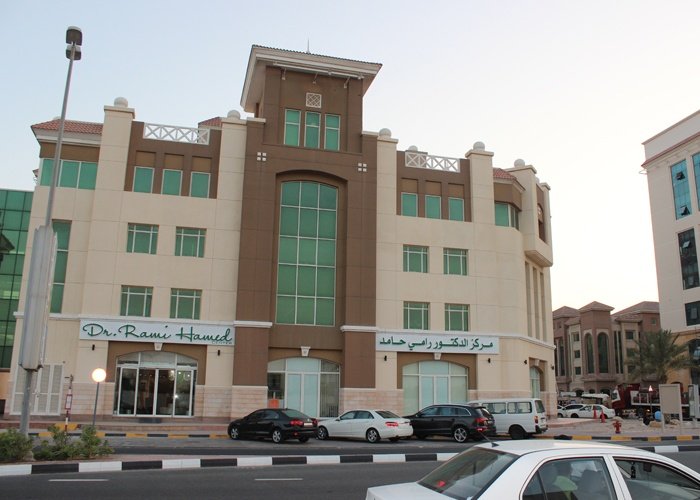
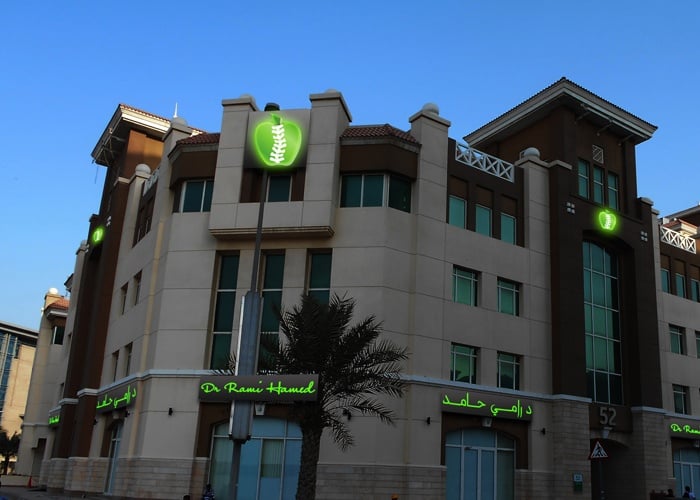
Plaque incision and grafting is a reconstructive surgical technique used to correct significant penile curvature caused by Peyronie’s disease. At Dr. Rami Hamed Center (DRHC) in Dubai Healthcare City, this procedure may be considered for carefully selected men with severe curvature, adequate erectile function, and sufficient penile length.
What Is Plaque Incision and Grafting?
During the procedure, the surgeon makes a controlled incision through the scarred plaque that is causing the penis to bend. This releases the tension responsible for the curvature. The resulting defect in the tunica is then covered with a graft to help restore the shape and structure of the penis.
Unlike penile plication, which straightens the penis by shortening the longer side, grafting is a lengthening approach that may be useful when penile shortening or severe curvature makes plication less suitable.
Who May Benefit From Plaque Incision and Grafting?
Plaque incision and grafting in Dubai may be considered for men with:
- Severe Peyronie’s disease with significant penile curvature
- Complex curvature or deformity
- Hourglass or indentation deformity in selected cases
- Significant curvature affecting sexual intercourse
- Adequate erectile function or erectile dysfunction that responds to treatment
- Sufficient penile length where a lengthening procedure is appropriate
Surgery is generally considered after Peyronie’s disease has become stable and when the deformity significantly affects sexual function.
Assessment Before Surgery
Before Peyronie’s disease treatment in Dubai, your specialist will assess the degree and direction of curvature, penile length, erectile function, pain, previous treatments, and the effect of the deformity on sexual intercourse.
Depending on your condition, a physical examination, erection assessment, penile ultrasound, or other investigations may be recommended. This assessment helps determine whether grafting, plication, penile prosthesis, or another treatment is most appropriate.
How Is the Procedure Performed?
The surgery is performed under appropriate anesthesia. The surgeon exposes the affected area and makes an incision through the plaque to release the curvature. A graft is then placed over the resulting tunical defect and secured appropriately.
The type of graft may vary depending on the surgical plan and patient factors. Graft materials can include selected tissue obtained from the patient's body or commercially prepared graft materials. There is no single graft material proven to be superior for every patient. :contentReference[oaicite:2]{index=2}
Recovery After Plaque Incision and Grafting
Swelling, bruising, tenderness, and temporary changes in penile sensation may occur during the early healing period. Recovery varies according to the extent of surgery and individual healing.
- Follow wound-care and medication instructions carefully.
- Avoid strenuous exercise during the initial recovery period.
- Attend all scheduled follow-up appointments.
- Follow any recommended penile rehabilitation or stretching instructions.
- Avoid sexual intercourse until your surgeon confirms adequate healing.
Initial recovery generally takes several weeks, while complete tissue healing may take longer.
Benefits of Plaque Incision and Grafting
For appropriately selected patients, the procedure may:
- Significantly improve penile curvature
- Improve the ability to achieve satisfactory sexual penetration
- Address severe or complex curvature
- Reduce the functional effect of Peyronie’s disease
- Avoid the intentional shortening associated with plication in selected patients
The main goal is functional correction. Complete straightening and restoration of the penis to its original length or appearance cannot be guaranteed.
Risks and Possible Complications
As with any reconstructive surgery, plaque incision and grafting have potential risks. These may include:
- Bleeding or hematoma
- Infection
- Changes in penile sensation
- Residual or recurrent curvature
- Erectile dysfunction
- Graft-related complications
- Penile shortening or dissatisfaction with penile appearance
- Pain or prolonged swelling
- Need for additional surgery
Because grafting involves releasing the plaque and reconstructing the tunica, careful patient selection is important. The American Urological Association notes that the procedure can provide curvature correction for appropriately selected patients, while erectile function outcomes require careful consideration.
Plaque Incision and Grafting at DRHC Dubai
At the Andrology Clinic at DRHC, Dubai, men with Peyronie’s disease receive individualized assessment and treatment planning.
Depending on the severity of curvature, penile length, erectile function, and presence of complex deformity, treatment may involve plaque incision and grafting, penile plication, or penile prosthesis surgery.
For men with Peyronie’s disease and significant erectile dysfunction, a penile prosthesis for Peyronie’s disease with erectile dysfunction may be a more appropriate surgical option.



.png?width=281&height=59&name=bookanappointment%20(1).png)