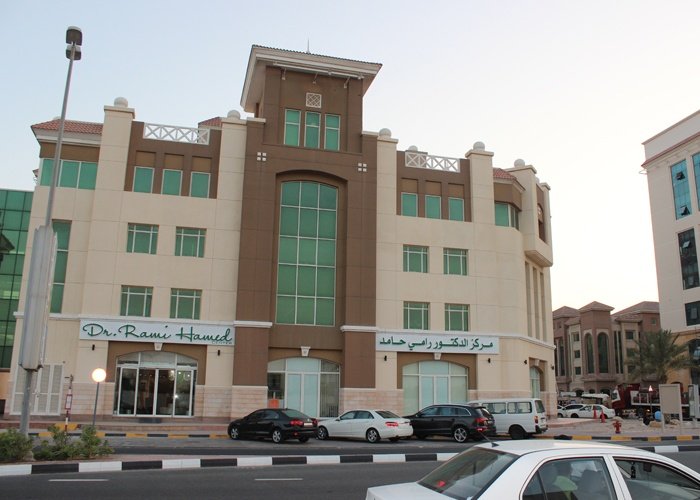
Penile Filler Removal & Correction in Dubai
At Dr. Rami Hamed Center (DRHC) in Dubai Healthcare City, we provide specialist assessment and treatment for men who experience unwanted results or complications after penile filler injections and penile enhancement procedures. Penile filler removal and correction can address problems such as lumps, asymmetry, filler migration, persistent swelling, pain, inflammation, infection, and changes in the appearance or texture of the penis.
The safest treatment depends on the type of filler used, amount injected, location of the material and condition of the surrounding tissues. A specialist assessment is therefore important before attempting to dissolve or surgically remove the filler.
Why Might a Penile Filler Need to Be Removed?
Penile fillers are sometimes used to increase penile girth or improve contour. However, an unwanted result can occur shortly after injection or develop months or years later. Removal or correction may be considered when you experience:
- Visible or palpable lumps and nodules
- Uneven or excessive penile enlargement
- Penile asymmetry or an irregular contour
- Filler migration to another area
- Persistent swelling or inflammation
- Pain or discomfort
- Infection or abscess formation
- Skin discoloration, thinning, or tissue changes
- Chronic inflammatory reactions or granuloma
- Unsatisfactory cosmetic results
- Complications following repeated filler injections
Which Types of Penile Fillers Can Be Removed?
The approach depends greatly on the substance that was injected. Hyaluronic acid (HA) fillers may sometimes be treated with hyaluronidase, an enzyme that breaks down hyaluronic acid. This option is not appropriate for every filler or every complication.
Permanent fillers, silicone, mineral oils, and other non-medical or unknown substances can be considerably more difficult to remove. They may become integrated with surrounding tissue and cause chronic inflammation, nodules, migration, or scarring. Surgical removal may be required in selected cases.
If you do not know what product was previously injected, bring any treatment records, product packaging, or documentation to your consultation if available.
How Is Penile Filler Removal Planned?
Treatment begins with a detailed assessment of the penis and the previous enhancement procedure. Your specialist may ask about:
- When and where the filler was injected
- The name and type of product used
- The quantity injected
- Whether injections were repeated
- Any previous attempts to dissolve or remove the filler
- Current symptoms such as pain, swelling, or discharge
Physical examination helps determine the location and extent of the filler. Ultrasound imaging may be useful in selected cases when the material or its depth is difficult to determine. Additional investigations may be recommended if infection, significant tissue damage, or another underlying condition is suspected.
Penile Filler Removal and Correction Options
Hyaluronidase Treatment
When the filler is confirmed to be hyaluronic acid, and the clinical situation is suitable, hyaluronidase can be injected to dissolve the filler. The amount and number of treatments depend on the quantity and distribution of the material. Hyaluronidase does not dissolve permanent fillers or non-hyaluronic substances.
Surgical Filler Removal
When filler is permanent, heavily encapsulated, infected, extensively distributed, or unsuitable for enzymatic treatment, surgical removal may be considered. The procedure aims to remove problematic foreign material while preserving as much healthy penile tissue as possible.
Correction of Penile Asymmetry
If filler has created an uneven contour, treatment may involve the removal of selected deposits or the correction of scarred or altered tissue. The appropriate approach depends on whether the problem is caused by excess filler, migration, fibrosis, or another tissue change.
Treatment of Infected Filler
Redness, increasing swelling, warmth, severe pain, pus, or fever can indicate infection. Treatment may require antibiotics, drainage of an abscess, and removal of infected foreign material. In these situations, treating the infection and protecting healthy tissue takes priority over cosmetic correction.
Reconstructive Treatment
Severe complications from permanent fillers or non-medical substances can occasionally result in extensive scarring or skin and soft-tissue damage. Selected patients may require staged penile skin grafting or other reconstructive procedures after the problematic material and unhealthy tissue have been addressed.
What Can I Expect During Recovery?
Recovery varies according to whether the treatment involves hyaluronidase, a minor removal procedure, or more extensive reconstructive surgery. Temporary swelling, bruising, and tenderness may occur after treatment.
You may be advised to avoid strenuous physical activity and sexual activity for a period determined by your specialist. Follow-up appointments help monitor healing and determine whether additional correction is required.
Can Penile Filler Be Completely Removed?
Complete removal is not always possible, particularly when permanent filler has migrated extensively or become incorporated into surrounding tissues. The expected outcome depends on the substance injected, how long it has been present, and whether there is scarring or tissue damage.
The objective is to achieve the safest and most functional result rather than aggressively removing healthy tissue simply to eliminate every microscopic trace of filler.
Why Choose DRHC for Penile Filler Removal in Dubai?
At Dr. Rami Hamed Center (DRHC), penile filler complications are assessed individually before a correction plan is recommended. Treatment may range from conservative management and hyaluronidase to surgical filler removal or reconstructive surgery, depending on the clinical findings.
Our specialists can also evaluate related concerns through penile filler complication treatment and other aesthetic urology services in Dubai.



.png?width=281&height=59&name=bookanappointment%20(1).png)