Daycase Hospital
Spinal Fusion — Dr. Rami Hamed Center
Been advised spinal fusion? Understand the recommendation before making your decision.
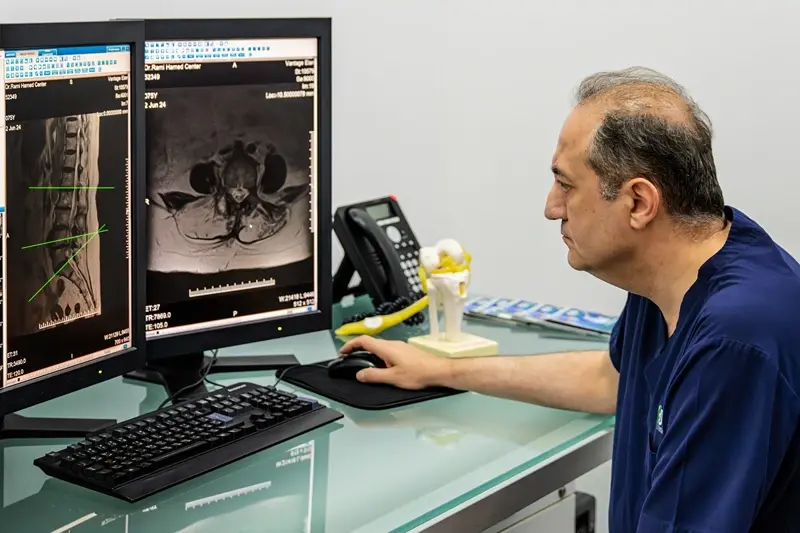
Have your diagnosis, imaging and proposed surgery assessed by Dr. Rami Hamed, Senior Consultant Orthopedic & Spinal Surgeon, including whether a motion-preserving approach may be appropriate in selected cases.
Online consultations available for international patients.
Understanding the recommendation
Spinal fusion is an established treatment and may be appropriate when stabilization of the spine forms an important part of treatment.
Before proceeding, a specialist second opinion can help you understand:
The objective is not to avoid fusion. It is to understand whether the proposed surgical approach is appropriate for your individual condition.
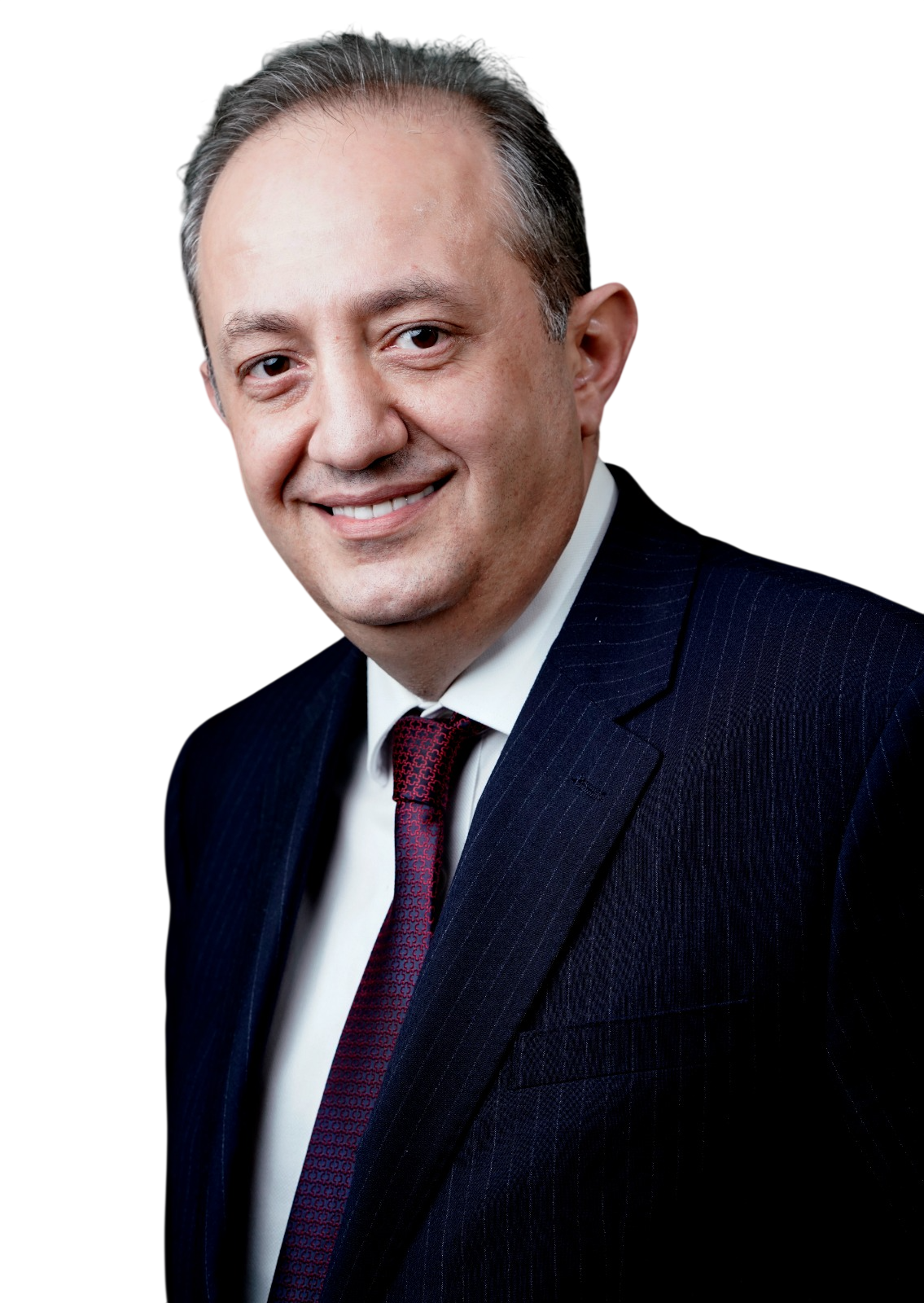
Your specialist surgeon
Senior Consultant Orthopedic & Spinal Surgeon
Dr. Rami Hamed has more than 30 years of clinical and surgical experience.
He completed his MSc in Trauma & Orthopedics at the Royal National Orthopedic Hospital, University College London (UCL) and is a Fellow of the Royal College of Surgeons of Edinburgh (FRCS). His qualifications also include FRCS Tr&Orth and UK CCT in Trauma & Orthopedics.
His approach to spine surgery considers the patient's symptoms, imaging, neurological findings, spinal stability and preservation of movement when determining the appropriate surgical strategy.
A motion-preservation approach
For appropriately selected patients with cervical disc disease, Cervical Disc Replacement may be considered as an alternative to fusion.
The degenerative or damaged disc is removed to decompress the affected neural structures and replaced with an artificial disc designed to maintain movement between the treated vertebrae.
Dr. Rami considers motion preservation an important treatment consideration in appropriately selected cervical spine patients.
Cervical Disc Replacement is not appropriate for every patient. Suitability depends on the diagnosis, anatomy, spinal stability, imaging and other clinical factors.
A balanced comparison
| Consideration | Spinal Fusion | Cervical Disc Replacement |
|---|---|---|
| Primary principle | Stabilize the treated level | Preserve motion at the treated level |
| Diseased disc removed | Depending on procedure | Yes |
| Neural decompression | Where clinically required | Where clinically required |
| Treated segment | Fusion / stabilization | Artificial disc maintains movement |
| Suitable for every patient? | No | No |
| Decision depends on | Diagnosis, stability, anatomy and clinical findings | |
The appropriate procedure depends on the individual patient. A specialist assessment is required to determine whether fusion, motion preservation or another approach should be considered.
How it works
Tell us about your diagnosis and the fusion procedure you have been advised to undergo.
Provide your available imaging, radiology reports and specialist recommendations.
Discuss your condition and proposed surgery through an online specialist consultation.
Discuss why fusion has been recommended and whether other considerations may be relevant to your case.
Share your case with our spine team
Provide the information you currently have. You do not need to have every medical record before contacting us.
Our team will contact you regarding the appropriate next step after receiving your information. Further clinical examination, imaging or investigations may be required depending on your case.
For patients in the UK
If you have been advised spinal fusion in the UK, you can begin your second opinion without initially travelling to Dubai.
Submit your available medical information and arrange an online consultation with Dr. Rami Hamed.
Depending on appointment availability, a same-day online consultation may be possible.
Your second opinion does not commit you to surgery or treatment at DRHC.
Common questions
No. Fusion may be the appropriate treatment for some conditions. A second opinion provides an additional specialist assessment of why fusion has been recommended and whether the proposed approach is appropriate for your individual condition.
For appropriately selected patients, cervical disc replacement may be considered as an alternative to fusion. Suitability depends on the diagnosis, anatomy, spinal stability, imaging and other clinical factors.
Motion-preservation techniques aim to treat the underlying spinal problem while maintaining movement at the treated spinal level where clinically appropriate. Cervical Disc Replacement is one example.
Available MRI imaging and radiology reports can form part of the assessment. Further examination or additional investigations may be required depending on your case.
Provide your available imaging and proposed surgical plan. The assessment can consider the clinical reasoning behind the proposed levels and whether further evaluation is required.
Yes. The process can begin remotely through submission of your available medical information and an online consultation. Depending on availability, a same-day online consultation may be possible.
Not to begin the second-opinion process. If an in-person examination, additional investigations or treatment are subsequently considered, the next steps can be discussed with you.
No. The purpose is to provide an additional specialist assessment. You can decide how you wish to proceed afterward.
Get started
Get an additional specialist assessment before making your treatment decision.
Submit your available imaging and medical information to begin your second opinion with Dr. Rami Hamed.